
Tesla starts rolling out FSD v15 with 'Reality View' and a 25x claim. What it actually says, and what it means here
Why it matters: FSD (Supervised) is sold in Australia for Model 3 and Model Y with HW4 hardware, but Tesla hasn't said when v15 or Reality View will reach Australian cars. The new speed-camera feature hasn't been confirmed for Australia either, so don't buy a Tesla expecting it yet.
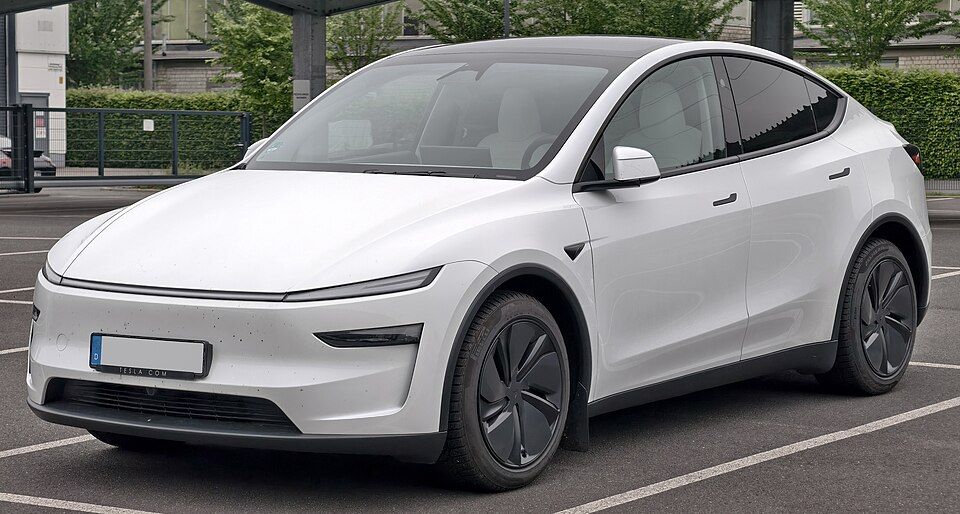
Tesla began rolling out version 15 of its Full Self-Driving (Supervised) software on Saturday 21 November, US time. In a post on X, Tesla said "FSD v15 now starting to roll out". Teslarati reports the first builds are going to members of Tesla's Early Access Program, and Elon Musk wrote hours earlier that v15 "goes to wide release next month".
What Reality View is
The headline feature is a new on-screen view of the drive. Tesla's release notes call it a "real-time generative driving visualization" seen from "an arbitrary virtual camera situated above your vehicle", shown fullscreen, on the map or in a split view. Musk says it's "real-time AI video generation (no gaming engine!)", but admits the latency is "a bit high due to compute constraints". Electrek and Teslarati both found it visibly laggy.
The 25x claim
Social media posts have been calling v15 "25 times safer". That's not what Tesla said. Tesla claims "25x better handling of safety critical cases", and the release notes say a new vision system improves the "critical intervention rate by 25x": Tesla's own measure of how often a driver has to step in. Tesla hasn't published the number it's improving on, so, as Electrek points out, the claim can't be checked.
Other changes
FSD can now slow down when it detects a speed camera; pressing the accelerator cancels this, and cancelling twice at the same camera makes the car remember the spot. Tesla also claims better detection of road signs, small animals, debris, potholes and deep standing water. A new Bike Rack Mode lets FSD run with a bike rack fitted, and driver monitoring is now less strict in the higher-speed driving profiles.
Tesla hasn't said which cars get v15 first, but Electrek notes Tesla has told investors its AI4 (HW4) computer is enough to run it.
What it means in Australia
FSD (Supervised) has been sold in Australia since September 2025 for Model 3 and Model Y with HW4 hardware, and CarExpert reported that v14.3.3 began reaching Australian cars on 19 June 2026, about two months after the US. Tesla hasn't said when v15 or Reality View will come here, none of the reports we checked mentions Australia, and the speed-camera feature hasn't been confirmed for Australian cars.
We think Reality View is clever, but it's the least important part of this update. A good-looking screen doesn't tell you whether the car drives better. The claim that matters is the 25x improvement in critical interventions, and until Tesla publishes the actual numbers, or independent testing backs it up, it should be treated as a claim. Whatever version arrives here, FSD in Australia is still a supervised system: the driver is responsible at all times.
Still unknown
When v15 reaches Australia, whether Reality View and speed-camera slowing will be included in Australian builds, and what Tesla's critical intervention rate actually is.
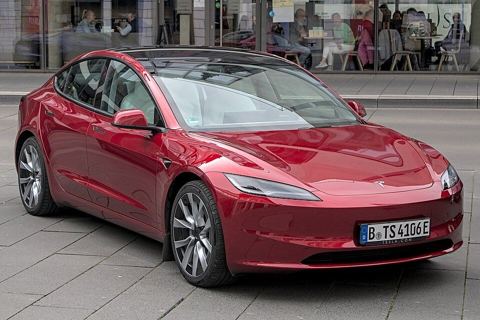
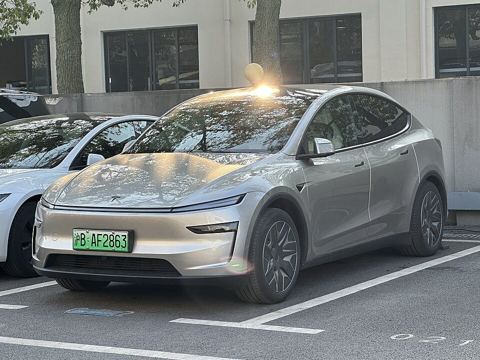
Images: Tesla Model 3. In Australia, FSD (Supervised) is offered on Model 3 and Model Y with HW4 hardware: Alexander-93, CC BY-SA 4.0; Tesla Model Y L. Photo of the car only; Tesla hasn't named which models get v15 first: JustAnotherCarDesigner, CC0, via Wikimedia Commons.
More EV news
- BYD says regional buyers on below-median incomes are the biggest users of novated leases on its best-seller 25 November 2026
- Hyundai's next Porter work truck has been spied testing as an EV. What we know, and what's only rumour 23 November 2026
- BYD puts a folding steering wheel into a production SUV. Here's what it is, and whether it could come here 23 November 2026
- Which tyres are best for an EV? What the latest test found 3 November 2026
- Does hard driving wear out an EV battery? What the new study actually found 1 November 2026
- Australia's fastest-charging car, the Denza Z9 GT, is delayed to 2027 27 October 2026
The EV Pick Monthly
The month's new cars, prices, battery breakthroughs and power deals for Australians, in one short email. Five-minute read, once a month.
One email a month. Unsubscribe any time. Privacy · Past issues
More guides
You might also like
How we work it out, and our sources
Weekly cost = the car's energy use × 250 km × your electricity or fuel price, with 90% of charging at home. Prices are list prices at November 2026; check with the dealer.
- Electricity: 2026–27 default rates (AER, Victorian Default Offer, state retailers). Public charging: Sydney network prices, July 2026.
- Petrol and diesel: capital-city daily averages from state government price feeds, via FuelRadar, 12 November 2026. Diesel for Hobart, Canberra and Darwin is estimated from the national fall.
- Cars: maker figures via CarExpert, Drive, CarsGuide and EV Central. Plug-in electric range is taken as 80% of the claim.
- Servicing: published capped prices; marked as an estimate where not yet published (CarExpert comparison).
- Tyres: an EV set lasts about 35,000 km, a petrol or hybrid set 50,000 km (RACV); prices from Gridly.
- Home charger: about $2,000 installed ($1,000–$3,000). Novated leases: PwC summary.
Printed from EV Pick Australia · evpick.com.au. Prices and costs are estimates; check with the dealer. © 2026 EV Pick (T. Crouch). For personal use only; not to be copied, republished or sold without permission.
Was this page useful?
Glad this helped ☕
If EV Pick saved you time or money, a coffee helps keep it independent. Every dollar goes back into improving the site.