
Which EV charger do I need?
Most homes need nothing bigger than a 7 kW wall charger, which is about three times as fast as a power point, and plenty of drivers get by on a power point alone. Answer a few questions for the charger that fits your home or business, and where to get it.
Find my charger
Most homes are single-phase.
The charger that fits
Home chargers compared
Tap a charger for the details.
 Autel · home charger7.4 kW
Autel MaxiCharger AC Lite 7.4 kW
The lowest-priced Autel: a simple, app-controlled charger for one car at home.
Power7.4 kWHome powerSingle-phaseCable5 m, attachedControlPhone app, Bluetooth and Wi-FiWarranty4 yearsPricePrice to be confirmedSold byJET ChargeCharger only. Installation is extra.
Buy at JET Charge ›Image: Autel, via JET Charge (product image).
 Autel · home charger7.4 kW
Autel MaxiCharger AC Single 7.4 kW
Autel's step-up model, with a longer warranty when JET Charge installs it.
Power7.4 kWHome powerSingle-phaseCable5 m, attachedControlPhone app, Wi-Fi and BluetoothWarranty5 years, installed by JET ChargePricePrice to be confirmedSold byJET ChargeCharger only. Installation is extra.
Buy at JET Charge ›Image: Autel, via JET Charge (product image).
- Autel · home charger22 kW
Autel MaxiCharger AC Single 22 kW
For homes with three-phase power. Check your car's limit first: many EVs take 11 kW or less.
PowerUp to 22 kWHome powerThree-phaseCable5 m, attachedControlPhone app, Wi-Fi and BluetoothWarranty5 years, installed by JET ChargePricePrice to be confirmedSold byJET ChargeCharger only. Installation is extra.
Buy at JET Charge ›Image: Autel, via JET Charge (product image).
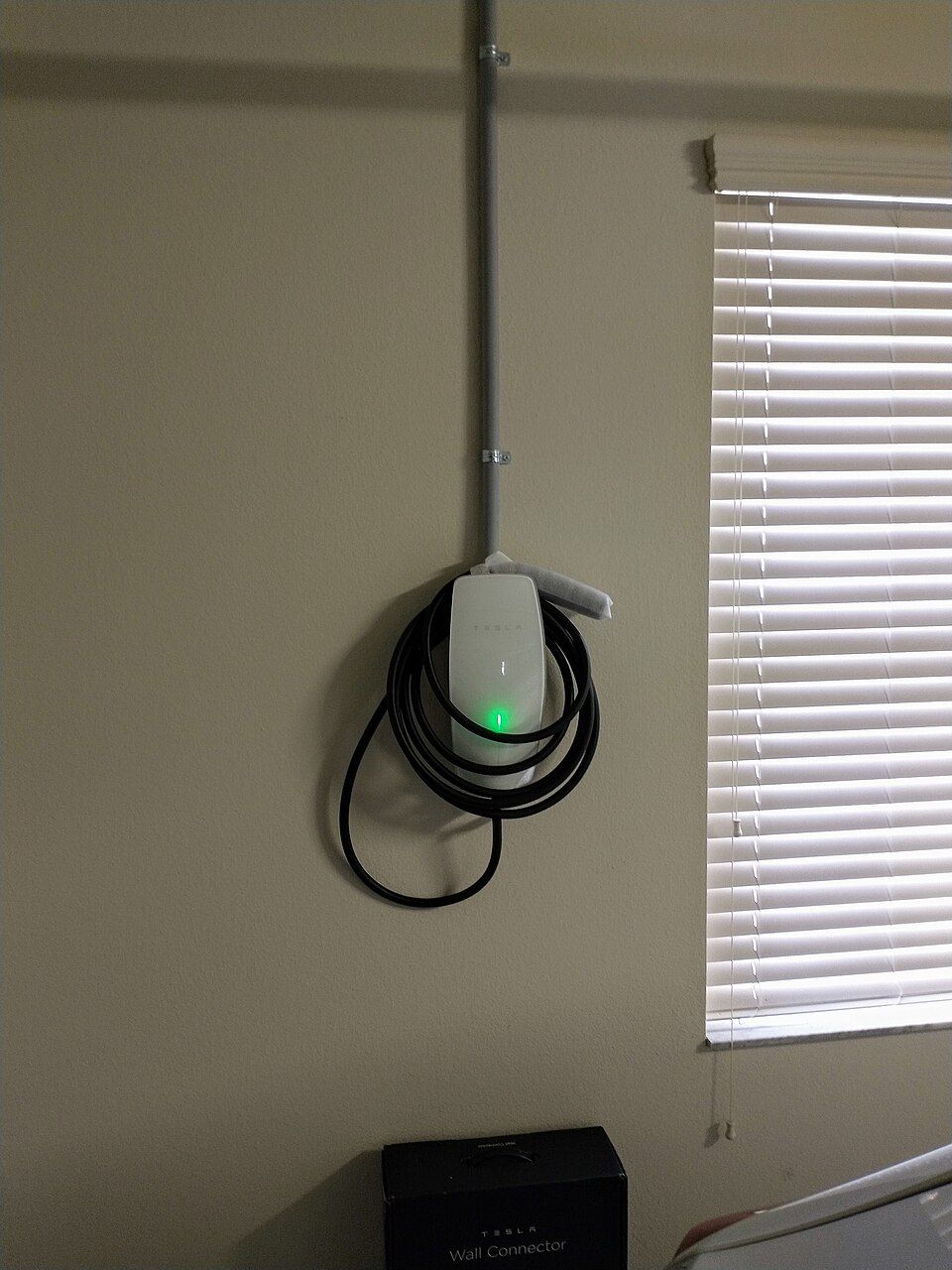 Tesla · home charger7 or 11 kW
Tesla Wall Connector (Gen 3)
Well proven, with the longest cable here. Works with any EV that has a Type 2 plug, not just Teslas.
Power7 kW single-phase, 11 kW three-phaseCable7.3 m, attachedWorks withAny Type 2 carWarranty4 yearsPrice$770 on sale (usually $800)Sold byJET ChargeCharger only. Installation is extra.
Buy at JET Charge ›Photo: Whoisjohngalt, CC BY-SA 4.0, via Wikimedia Commons.
 Evnex · home charger7.4 kW
Evnex E2 Flex 7.4 kW
Evnex's lowest-priced smart charger, made in New Zealand and bought direct. Solar charging can be switched on later for a fee.
Power7.4 kWHome powerSingle-phaseCable5 m, Type 2ControlPhone app, Wi-FiSolarOptional $349 upgradeWarranty4 yearsMade inNew ZealandPrice$799Sold byEvnexCharger only. Installation is extra.
Buy at Evnex ›Image: Evnex (product image).
 myenergi · home chargerSolar-smart
myenergi Zappi
Built to follow your rooftop solar, so the car charges on power you'd otherwise export.
Best forHomes with rooftop solarSolarCharges from spare solarPrice$1,400 on sale (usually $1,595)Sold byJET ChargeCharger only. Installation is extra.
Buy at JET Charge ›Photo: Aethonatic, CC0, via Wikimedia Commons.
Charger-only prices, checked 15 November 2026 on each seller's own site; Autel prices are being confirmed with JET Charge. Installation is extra. EV Pick is talking with JET Charge and Autel about working together. We don't earn anything from these links today; if that changes, we'll say so here, and it will never change the price you pay. Any licensed electrician can install a wall charger.
More on charging
- What a wall charger costs to install The extras, state loans and network rules
- Is a power point enough for me? Range and home charging calculator
- Home charging set-up checklist Free and printable
- No driveway? Charging in apartments and on the street Your options
- Charging from rooftop solar What it saves
- Charging a van fleet Chargers, costs and grants calculator
- Cables and gear What's worth having
The EV Pick Monthly
The month's new cars, prices, battery breakthroughs and power deals for Australians, in one short email. Five-minute read, once a month.
One email a month. Unsubscribe any time. Privacy · Past issues
More: questions and more guides
Common questions
Do I need a wall charger for an EV?
Not always. A normal power point adds about 130 km of range overnight, which covers most people's daily driving. A 7 kW wall charger is about three times as fast, and makes sense if you drive more than about 100 km a day or share one EV between drivers.
How much does a home EV charger cost in Australia?
Chargers start at about $770 for the unit, and a wall charger typically costs $1,000–$3,000 installed. The biggest variable is how far the charger is from your switchboard.
Do I need a 22 kW charger at home?
Usually not. 22 kW needs three-phase power, and many EVs can only take 7 to 11 kW from a wall charger. A 7 kW charger refills most cars overnight.
What chargers does a business with electric vans need?
Most van fleets can charge overnight on 7 kW or 22 kW AC chargers at the depot, with load management once several chargers share a site. DC fast chargers are only needed for daytime top-ups.
More guides
More in Charging
You might also like
How we work it out, and our sources
Weekly cost = the car's energy use × 250 km × your electricity or fuel price, with 90% of charging at home. Prices are list prices at November 2026; check with the dealer.
- Electricity: 2026–27 default rates (AER, Victorian Default Offer, state retailers). Public charging: Sydney network prices, July 2026.
- Petrol and diesel: capital-city daily averages from state government price feeds, via FuelRadar, 12 November 2026. Diesel for Hobart, Canberra and Darwin is estimated from the national fall.
- Cars: maker figures via CarExpert, Drive, CarsGuide and EV Central. Plug-in electric range is taken as 80% of the claim.
- Servicing: published capped prices; marked as an estimate where not yet published (CarExpert comparison).
- Tyres: an EV set lasts about 35,000 km, a petrol or hybrid set 50,000 km (RACV); prices from Gridly.
- Home charger: about $2,000 installed ($1,000–$3,000). Novated leases: PwC summary.
Printed from EV Pick Australia · evpick.com.au. Prices and costs are estimates; check with the dealer. © 2026 EV Pick (T. Crouch). For personal use only; not to be copied, republished or sold without permission.
Was this page useful?
Follow EV PickNew cars and price drops in your feed
Glad this helped ☕
If EV Pick saved you time or money, a coffee helps keep it independent. Every dollar goes back into improving the site.
No pressure. EV Pick stays free either way.