
BYD says regional buyers on below-median incomes are the biggest users of novated leases on its best-seller
Why it matters: A novated lease on an EV under the luxury car tax threshold is currently free of fringe benefits tax, which can save thousands a year. A proposed change from April 2027 (not yet law) would keep the full exemption only for EVs up to $75,000, which still covers the Sealion 7, and leases signed before then keep their terms.
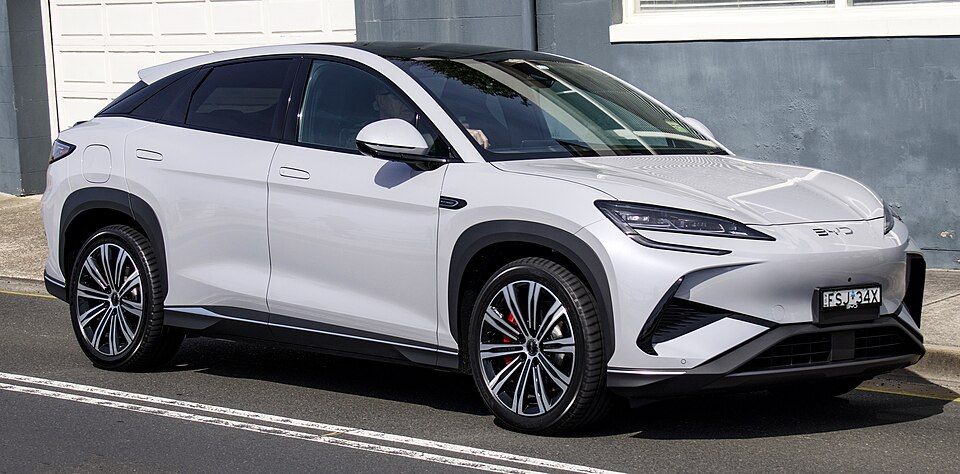
BYD Australia released figures earlier this week that it says show who is really using novated leases to buy its electric cars. Nationally, 28.7% of Sealion 7 sales go through a novated lease. In BYD's Rockhampton market area the figure is 59.5%, about twice the national rate.
Where the leases are
The other areas at the top of BYD's list are Morayfield (49.2%) and North Lakes (49.1%) north of Brisbane, Hobart (46.9%), Ipswich (44.8%), Caloundra (44.2%), Nambour (42.9%) and Bunbury in Western Australia (42.7%). BYD says each of these areas has a median household income below $86,200. These are BYD's market areas, the territories it assigns to its dealers, not council areas or postcodes.
BYD chief operating officer Stephen Collins said the buyers are "families and local businesses looking for instant financial relief in the midst of rising cost-of-living pressures", and that they drive big distances and have "done the maths" on fuel and servicing.
BYD also published its own five-year estimates of fuel and maintenance savings: up to $12,500 for a city driver doing 15,000 km a year, $20,000 at 25,000 km and $30,000 at 35,000 km. They assume petrol at $1.90 a litre and home charging at 30c per kWh. They are BYD's estimates, not measured results. BYD says it has opened more than 40 sales and service centres outside the major cities this year, and expects about 80 regional and provincial dealers by the end of the year.
Why it matters now
Since July 2022, an EV under the luxury car tax threshold for fuel-efficient cars has been exempt from fringe benefits tax when supplied through an employer, which is what makes a novated lease so much cheaper. Plug-in hybrids lost the exemption on 1 April 2025. A change announced in the May Budget, which isn't law yet, would keep the full exemption from 1 April 2027 only for EVs up to $75,000, with a 25% discount for dearer ones, and a 25% discount for all eligible EVs from 1 April 2029. The Sealion 7, at $54,990 and $63,990 before on-road costs, sits under the $75,000 line.
The exemption is often criticised as a tax break for high earners in the cities, so these figures are a useful counterpoint: high-mileage drivers in regional Queensland, Tasmania and WA are among the heaviest users, and they're also the people who save the most by not buying petrol. But we'd treat them with some caution. This is one brand's data, for one model, released while the exemption's future is being debated, and BYD hasn't said what period it covers or how many cars are involved. A high lease share in an area with a lower median income doesn't tell us the income of the people actually signing the leases.
We think the debate would be better served by independent figures, from the Tax Office or the leasing industry, on who uses the exemption by income and region. Until then, if you drive long distances and your employer offers salary packaging, a novated EV lease is worth pricing up.
- Rockhampton59.5
- Morayfield49.2
- North Lakes49.1
- Hobart46.9
- Ipswich44.8
- Caloundra44.2
- Nambour42.9
- Bunbury42.7
- National28.7
Data: BYD Australia, as reported by Autotalk and CarSauce (23 Nov 2026). Market areas are the territories BYD assigns to its dealers: Rockhampton, Morayfield, North Lakes, Ipswich, Caloundra and Nambour are in Queensland, Hobart in Tasmania, Bunbury in WA. BYD hasn't said what period the figures cover.
More EV news
- Tesla starts rolling out FSD v15 with 'Reality View' and a 25x claim. What it actually says, and what it means here 24 November 2026
- Hyundai's next Porter work truck has been spied testing as an EV. What we know, and what's only rumour 23 November 2026
- BYD puts a folding steering wheel into a production SUV. Here's what it is, and whether it could come here 23 November 2026
- EVs outsell petrol cars again: nearly one in four new cars in September 6 October 2026
- Tesla cuts the Model Y Performance by $4,500 and discounts cars in stock 5 October 2026
- Ampol agrees to buy Evie Networks for $225 million, creating a network of about 1,425 fast-charging bays 1 October 2026
The EV Pick Monthly
The month's new cars, prices, battery breakthroughs and power deals for Australians, in one short email. Five-minute read, once a month.
One email a month. Unsubscribe any time. Privacy · Past issues
More guides
You might also like
How we work it out, and our sources
Weekly cost = the car's energy use × 250 km × your electricity or fuel price, with 90% of charging at home. Prices are list prices at November 2026; check with the dealer.
- Electricity: 2026–27 default rates (AER, Victorian Default Offer, state retailers). Public charging: Sydney network prices, July 2026.
- Petrol and diesel: capital-city daily averages from state government price feeds, via FuelRadar, 12 November 2026. Diesel for Hobart, Canberra and Darwin is estimated from the national fall.
- Cars: maker figures via CarExpert, Drive, CarsGuide and EV Central. Plug-in electric range is taken as 80% of the claim.
- Servicing: published capped prices; marked as an estimate where not yet published (CarExpert comparison).
- Tyres: an EV set lasts about 35,000 km, a petrol or hybrid set 50,000 km (RACV); prices from Gridly.
- Home charger: about $2,000 installed ($1,000–$3,000). Novated leases: PwC summary.
Printed from EV Pick Australia · evpick.com.au. Prices and costs are estimates; check with the dealer. © 2026 EV Pick (T. Crouch). For personal use only; not to be copied, republished or sold without permission.
Was this page useful?
Glad this helped ☕
If EV Pick saved you time or money, a coffee helps keep it independent. Every dollar goes back into improving the site.