
Xpeng L03 Power-XWhat does it cost to run, and is an EV cheaper?
Plugged in at home each night and driving 250 km a week, the Xpeng L03 Power-X Long Range would do about 85% of its driving on electricity, costing about $18.21 a week in power and petrol in NSW. Never plug it in and it's a 5.5 L/100 km petrol SUV, about $30.15 a week. Over 5 years it costs about $53,680 to own, and 7 of the 32 similar EVs we track (SUVs from about $30,000 to $56,000) work out cheaper, led by the Leapmotor B03X ($38,462 over 5 years) and the GWM Ora 5 ($43,376 over 5 years). Compare them.
Is an EV cheaper? See it head to head with the Xpeng L03, BYD Atto 3 or Geely EX5.
Battery and range
Battery37.2 kWhElectric range215 km (WLTP)Power point16 hoursPetrol use, flat battery5.5 L/100 kmPerformance
0–100 km/h6.8 sPower178 kWTorque280 NmDriveRWDPrice
From$41,900 + on-roadsElectric range is the maker's claim on the test cycle shown. Towing: rated to tow 1,500 kg braked. Confirm the exact car's rating before you tow. Towing with an EV: range, tow ball limits and every car's rating › Maker's claimed figures, combined petrol and electric output. A dash means the figure isn't published for the Australian version.
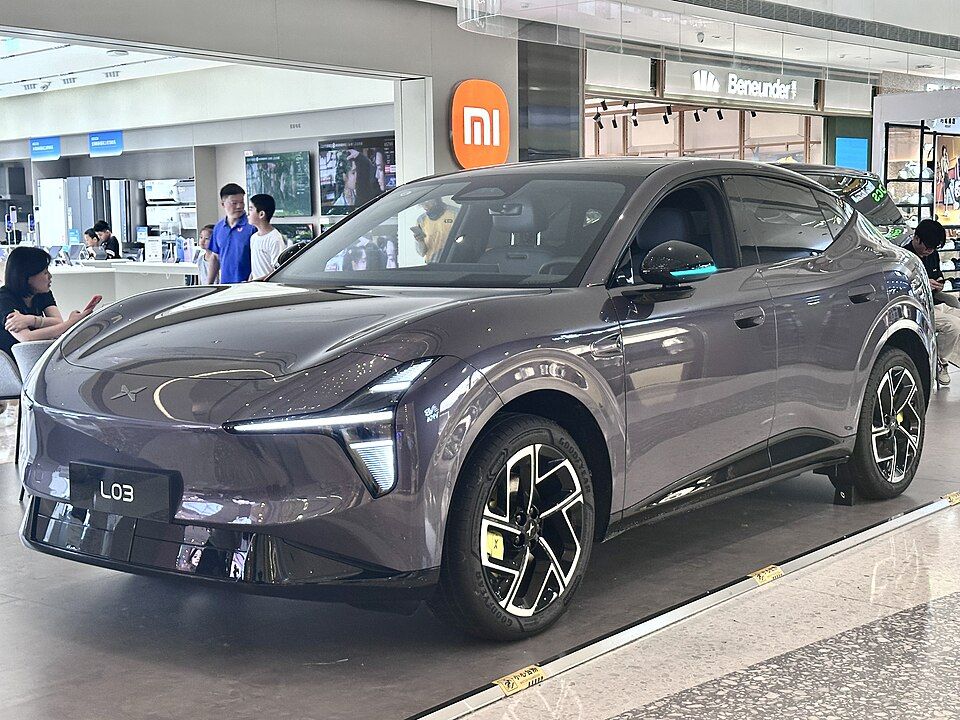
Photo: JustAnotherCarDesigner, CC0, via Wikimedia Commons. May show an overseas version or a related model.
Running costsAbout $18.21 a week plugged in at home (NSW)
What would it cost you to run?
Your detailsYour state · 250 km a weekChange
Your new solar system
Panels power your house as well as the car, so we only add the car's part of the cost.
Your current car
About the solar figure: it's an average. Cloudy days, winter and charging at night all mean more power from the grid, so your real cost will vary through the year.
Fine-tune the numbers
Costs in every state
Xpeng L03 Power-X Long Range, 250 km a week. Plugged in, about 85% of driving is on home electricity at each state's 2026–27 default rate; the rest uses petrol at this week's capital-city average.
| State | Full charge | Per week, plugged in | Per week, never plugged in |
|---|---|---|---|
| NSW | $12.61 | $18.21 | $30.15 |
| Victoria | $10.56 | $16.09 | $30.83 |
| Queensland | $10.42 | $15.84 | $30.21 |
| South Australia | $15.59 | $21.34 | $29.48 |
| WA | $12.39 | $17.86 | $29.43 |
| Tasmania | $9.23 | $14.81 | $32.01 |
| ACT | $13.76 | $19.73 | $31.91 |
| NT | $11.20 | $17.10 | $33.01 |
Specs215 km on electricity, then 5.5 L/100 km
Electric range is the maker's claim on the test cycle shown.
| Variant | Price | Battery | Electric range | Full charge, power point | Petrol use, flat battery |
|---|---|---|---|---|---|
| Long Range | $41,900 + on-roads | 37.2 kWh | 215 km (WLTP) | 16 hours | 5.5 L/100 km |
Towing: rated to tow 1,500 kg braked. Confirm the exact car's rating before you tow. Towing with an EV: range, tow ball limits and every car's rating ›
| Variant | 0–100 km/h | Power | Torque | Drive |
|---|---|---|---|---|
| Long Range | 6.8 s | 178 kW | 280 Nm | RWD |
Maker's claimed figures, combined petrol and electric output. A dash means the figure isn't published for the Australian version.
Owning one5-year cost from $53,680 · track record: Too new to tell · 7 yrs / unlimited km warranty
250 km a week in NSW, plugged in at home most nights. No wall charger needed. Scheduled service every 12 months or 20,000 km, about $297 a visit (estimate, as pricing for this model is not yet published). Warranty: 7 yrs / unlimited km (battery 8 yrs / 160,000 km).
| Variant | On the road* | Power + petrol / yr | Servicing / yr | Tyres / yr | 5-year total |
|---|---|---|---|---|---|
| Long Range | $45,900 | $947 | $297 | $312 | $53,680 |
What do "on the road" and "cost to own" mean?
Before on-road costs (+ on-roads): the car's list price only. You pay extra government charges and dealer fees on top when you buy.
On-road costs: stamp duty, first year's registration, compulsory third party (CTP) insurance, number plates and the dealer's delivery fee. They usually add $3,000–6,000 depending on the car and your state. Where a price is "before on-roads" we add about $4,000. See stamp duty and rego by state.
Drive-away: a price that already includes the on-road costs, so it's what you actually pay to drive the car home.
On the road price: the drive-away price, or the list price plus our on-road estimate.
Cost to own: everything you'd spend over the years you keep the car (5 unless you change it): the on the road price, plus a home wall charger for EVs (about $2,000, one-off), plus charging or fuel, scheduled servicing and tyres for every year. Divide it by the number of weeks to see what the car really costs you each week.
Match score (Pick my car): this is about fit, not quality. Each car that fits your answers is compared only with the other cars that fit, on eight things, and a car that does something less well than the others in that group scores lower on it, even if it's good at it. Change your budget or answers and the group changes, so the scores do too. The eight things: how much car the money buys (price, 20%), ANCAP safety rating (15%: a current rating counts in full, an expired one less, and a car ANCAP hasn't rated counts as middling), range (15%), performance (0–100 km/h, or power where no time is published, 10%), fast-charging speed (peak DC kW, 10%), warranty length (10%, with the battery warranty counted for cars that plug in), servicing and tyre costs (15%), and recalls and track record (5%: major recalls in Australia on our list count against a car (our recall list covers the bigger, well-reported ones, so a clean record here is not a guarantee), and models sold here for longer get a little credit). A figure we don't have counts as middling, not as bad. "Most car for my budget" ranks by this match score; "Lowest cost to own" ranks by cost and uses the score only to split near-ties.
Not included: yearly rego renewals and insurance after the first year (see what EVs and hybrids cost to insure), finance interest, and what the car is worth when you sell it. These vary too much by person and car to estimate fairly, and resale value is the biggest unknown, especially for newer brands.
Insurance isn't included above. See what EVs and hybrids cost to insure and get quotes before you buy.
In our rankings: No. 9 of 35 plug-in hybrids
Reliability and track record
How we rate: under 2 years on sale here is "Too new to tell". A widely reported fault or repeated recalls is "Known issues". Otherwise it's "Established". We list documented problems with a source, not opinions. Single recalls that were fixed are listed but don't change the rating, as most models have some.
The Xpeng L03 Power-X has been on sale here for less than two years, so there isn't enough Australian ownership history to judge. That isn't a bad sign, just an unknown. A long warranty matters more for newer models.
About Xpeng
Tech-heavy EVs with fast charging. Who owns which car brand.
Road tripsFuel costs on big Australian trips
Fuel cost for the Long Range at its claimed 5.5 L/100 km and this week's NSW petrol price, starting with a full battery. Under each trip: the same drive in its closest electric rival, with charging stops. Tap a trip for the full charging guide.
BYD Atto 3: $94 in charging, 3 charging stopsSydney to Brisbane908 km · about $107 in petrol and power · 1 refuel
BYD Atto 3: $100 in charging, 3 charging stopsBrisbane to Cairns1693 km · about $201 in petrol and power · 2 refuels
BYD Atto 3: $204 in charging, 7 charging stopsMelbourne to Adelaide726 km · about $85 in petrol and power · no refuel
BYD Atto 3: $71 in charging, 2 charging stopsSydney to Canberra286 km · about $32 in petrol and power · no refuel
BYD Atto 3: $19 in charging, no charging stopsMelbourne to Adelaide via the Great Ocean Road970 km · about $114 in petrol and power · 1 refuel
BYD Atto 3: $105 in charging, 3 charging stopsPerth to Adelaide across the Nullarbor2701 km · about $323 in petrol and power · 3 refuels
BYD Atto 3: $345 in charging, 14 charging stopsAdelaide to Darwin3023 km · about $362 in petrol and power · 3 refuels
BYD Atto 3: needs a detourBrisbane to Darwin3421 km · about $410 in petrol and power · 4 refuels
BYD Atto 3: needs a detourPerth to Darwin via Broome4248 km · about $509 in petrol and power · 5 refuels
BYD Atto 3: needs a detour
RivalsLeapmotor C10 REEV, Jaecoo J7 Super Hybrid, Chery Tiggo 7 Super Hybrid
 LeapmotorC10 REEV$43,888 · $20.83/wk
 JaecooJ7 Super Hybrid$39,990 · $19.07/wk
 CheryTiggo 7 Super Hybrid$39,990 · $20.08/wk
See all four side by side in Compare ›
More on rivals: head-to-heads and what's coming
The Xpeng L03 Power-X against EVs
The eight EVs with the lowest 5-year cost to own, against the Xpeng L03 Power-X Long Range at $53,680. Green means the EV works out cheaper. EV totals include a home charger.
| EV | Charging / week | 5-year total | vs this plug-in |
|---|---|---|---|
| BYDAtto 1 Essential | $14.54 | $29,146 | −$24,534 |
| BYDDolphin Essential | $14.91 | $38,141 | −$15,539 |
| LeapmotorB03X Style | $12.75 | $38,462 | −$15,217 |
| GeelyEX2 Complete | $14.91 | $39,523 | −$14,157 |
| MGMG4 Urban 43 | $15.47 | $42,474 | −$11,205 |
| GWMOra 5 Lux | $14.54 | $43,376 | −$10,303 |
| HyundaiInster Standard Range | $13.41 | $44,497 | −$9,182 |
| GACAion UT Premium | $15.38 | $45,160 | −$8,520 |
Head-to-head with its closest electric rivals
Worth waiting for?
These similar-sized cars at around the Xpeng L03 Power-X's price are due in Australia within the next few months. Timing and prices aren't final, so only wait if you can.
- HQ EHS4 Electric
Due: Unveiling November 2026, deliveries from January 2027 · Price not announced yet - Mahindra XEV 9e Electric
Due: Not confirmed. CarsGuide understands it could arrive around the end of 2026; Mahindra Australia hasn't given a date · Price not announced yet - Jetour T1 and T2 Petrol and plug-in hybrid
Due: 2027. Both are now approved for sale in Australia · Price not announced yet
QuestionsHow much is a Xpeng L03 Power-X in Australia? and 4 more
How much is a Xpeng L03 Power-X in Australia?
The Xpeng L03 Power-X starts from $41,900 + on-roads (November 2026). Prices change often, so check with a dealer.
How far can a Xpeng L03 Power-X go on electricity?
The claimed electric range is up to 215 km. Expect roughly 80% of that in real driving, which still covers most people's daily trips. After that it runs as a petrol hybrid.
Do I need a home charger for a Xpeng L03 Power-X?
No. Its 37.2 kWh battery refills from a normal power point in about 16 hours, so overnight is plenty. That saves the $2,000 or so a wall charger costs.
What if I don't plug the Xpeng L03 Power-X in?
Then it's a petrol car using about 5.5 L/100 km, or about $30.15 a week for 250 km in NSW. A plug-in hybrid only saves money if you charge it.
Is a Xpeng L03 Power-X cheaper to own than an EV?
Counting price, running costs, servicing and tyres over 5 years, 7 of the 32 similar EVs we track (SUVs from about $30,000 to $56,000) cost less to own, led by the Leapmotor B03X ($38,462) and the GWM Ora 5 ($43,376).
How we work it out, and our sources
Weekly cost = the car's energy use × 250 km × your electricity or fuel price, with 90% of charging at home. Prices are list prices at November 2026; check with the dealer.
- Electricity: 2026–27 default rates (AER, Victorian Default Offer, state retailers). Public charging: Sydney network prices, July 2026.
- Petrol and diesel: capital-city daily averages from state government price feeds, via FuelRadar, 12 November 2026. Diesel for Hobart, Canberra and Darwin is estimated from the national fall.
- Cars: maker figures via CarExpert, Drive, CarsGuide and EV Central. Plug-in electric range is taken as 80% of the claim.
- Servicing: published capped prices; marked as an estimate where not yet published (CarExpert comparison).
- Tyres: an EV set lasts about 35,000 km, a petrol or hybrid set 50,000 km (RACV); prices from Gridly.
- Home charger: about $2,000 installed ($1,000–$3,000). Novated leases: PwC summary.
Printed from EV Pick Australia · evpick.com.au. Prices and costs are estimates; check with the dealer. © 2026 EV Pick (T. Crouch). For personal use only; not to be copied, republished or sold without permission.
Was this page useful?
Follow EV PickNew cars and price drops in your feed
Glad this helped ☕
If EV Pick saved you time or money, a coffee helps keep it independent. Every dollar goes back into improving the site.
No pressure. EV Pick stays free either way.