
Buying a used electric car in Australia: The full guide
A used electric car can be very good value in Australia, and the battery is rarely the weak point. Large studies put typical battery health at about 90% after 7–8 years, and a Perth Tesla Model 3 used for Uber still had an estimated 88–90% after 410,000 km. But cars of the same age can differ by more than 10%, so never buy without a battery health figure for that exact car. Used EVs with a modern fast-charging plug start at about $13,000.
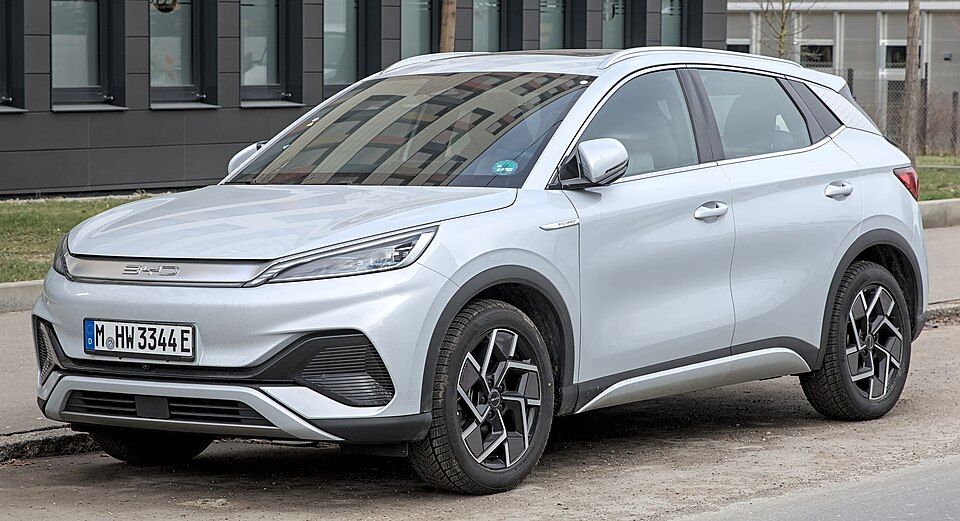
Why look at a used EV now
Three things have changed. There are far more of them: used EV sales rose 54.6% in the first half of 2026 while total used car sales fell 6.6%, and a used Tesla Model Y is now the fastest-selling used car in the country. Prices have come down, because sharp price cuts on new EVs pulled used prices with them. And there is now real data on how the batteries age, which was the big unknown five years ago.
The trade-off is simple. With a petrol car you worry about the engine and gearbox. With an EV there is far less to wear out, and almost all the risk sits in one part: the battery. So this guide spends most of its time there.
How fast do EV batteries really wear?
Slower than most people expect. These are the main studies, and they broadly agree.
- Generational, 2025 (8,000+ cars, 36 brands, UK): about 97% health at 2–3 years, about 90% at 7–8 years and about 85% at 8–12 years.
- Aviloo, 2022–26 (500,000+ battery tests on 20 models): typically 87–94% at 150,000 km, with 16 of the 20 models at 90% or better. The Tesla Model Y was at 90.3% and the Model 3 at 88.9%; the Nissan Leaf was lowest at about 86–87%. But there was up to 13.5% between the best and worst examples of one model.
- Geotab, January 2026 (22,700+ fleet EVs): 2.3% lost a year on average. About 1.5% for cars mostly charged slowly, and up to 3.0% for heavy fast charging above 100 kW.
- ADAC long-term test (one VW ID.3, Germany): 91% after 160,000 km and four years, despite fast charging for over 40% of its charges and often sitting at 100%.
- Recurrent, November 2025 (30,000+ cars, US): batteries replaced outside recalls in about 8.5% of EVs from 2016 or earlier, about 2% of the next generation and 0.3% of cars from 2022 on.
The loss isn't a straight line. Batteries tend to drop a few per cent early, then settle into a long, slow decline. The ADAC car shows it: 96% at about 22,000 km, 94% at about 87,000 km and 91% at about 146,000 km, where it was still sitting at 170,000 km.
Age counts as well as kilometres. A battery ages while it sits, so a ten-year-old car with low kilometres is not "as new". Recurrent's figures show the oldest EVs are the ones that have needed new batteries, partly because early cars such as the first Nissan Leaf had no liquid cooling.
Read the fine print. Most of this data is from Europe and the US, the fleet figures come from work vehicles that fast charge a lot, and Recurrent says its owner community isn't a perfect sample of all EVs. Australian data is thin: the NRMA's first 50 battery checks found most cars in the normal range, 15 below average for their age and 5 above. More in how long EV batteries last.
What that means in kilometres
Battery health translates almost directly into range. A car at 90% health has about 90% of the range it had new.
| Car | New | At 90% | At 80% |
|---|---|---|---|
| MG ZS EV (2020–21) | 263 km | 237 km | 210 km |
| BYD Atto 3 | 420 km | 378 km | 336 km |
| Hyundai Kona Electric (2019–23) | 449 km | 404 km | 359 km |
| Tesla Model 3 RWD (2021–23) | 491 km | 442 km | 393 km |
Official (WLTP) range multiplied by battery health. Real-world range is lower than the official figure for any car, new or used: allow roughly 10–20% less on the highway.
The point: for a car that started with 400 km or more, normal wear doesn't change how you use it. For a car that started with 250 km, losing 20% matters, so short-range cars need the closest battery check. Work out what you need with how much range do I need?
High-kilometre examples
Averages are one thing. These are real cars that have gone a very long way, including the ones that didn't go perfectly.
- 410,000 km, original battery (Western Australia). A 2021 Tesla Model 3 Standard Range Plus used for Uber. EV specialist EV Workz in Port Kennedy read the car's battery data in August 2025 and calculated its health at 88–90%. About 71% of its charging was slow (AC) and 29% fast (DC). The repair it came in for was worn motor mounts: about $130 in parts and seven hours of labour. It has an LFP battery, a type known for long life.
- 666,666 km before a new battery (Byron Bay). A 2018 Tesla Model S doing airport transfers ran its original battery to 666,666 km. It was then replaced under Tesla's 8-year, unlimited-kilometre warranty of the time, and the car had passed 700,000 km by January 2024 on its original brake pads.
- 160,000 km in four years (Germany). The ADAC motoring club's VW ID.3 kept 91% of its capacity through the full 160,000 km of its battery warranty, treated roughly on purpose.
- 2 million km, but not on one battery (Germany). The world's highest-kilometre Tesla, a 2014 Model S, is on its fourth battery. The owner says one pack lasted 670,000 km and another 505,000 km, but the original had problems at about 290,000 km. It has also been through more than a dozen motors.
What to take from them. A well-made, liquid-cooled battery that is used every day can outlast the rest of the car. But these are standout cases, mostly Teslas doing constant highway work, and the last one shows early EVs had real failures. They show what is possible, not what any one used car will do.
Good used EVs to look at
Price ranges are dealer guide prices for that model year at November 2026 (RedBook via carsales, or Glass's Guide via CarsGuide), from the cheapest version to the dearest, so the low figure is where that car starts. Each link goes to that car's used page with its recalls, known faults and what to check.
Starting under $20,000
- MG ZS EV (2021): $17,100–$20,100. 263 km of range when new. The cheapest way into a small electric SUV with a modern CCS2 plug. Short range, so check the battery closely.
- Hyundai Ioniq Electric (2019): $19,900–$24,600. 230 km of range when new. Very efficient hatch with a small battery. A good city car.
- Nissan Leaf (second generation) (2019): $17,700–$25,000. 270 km of range when new. Roomy and simple, but the battery is air-cooled, which ages faster in heat, and it fast charges through the older CHAdeMO plug that fewer new chargers have.
Starting at $20,000 to $25,000
- MG4 (2023): $22,000–$37,000. 350 km of range when new. A modern hatch on a purpose-built electric platform. Bigger-battery versions sit at the top of the price range.
- BYD Dolphin (2023): $24,600–$30,700. 340 km of range when new. Small hatch with an LFP battery, which copes well with regular charging to 100%.
- BYD Atto 3 (2022): $24,600–$29,500. 420 km of range when new. A family-size SUV with an LFP battery, and plenty for sale.
- Hyundai Kona Electric (first generation) (2020): $21,700–$38,700. 449 km of range when new. Long range for the money. 2018–20 cars had a battery fire-risk recall and many were given a new battery: ask for the paperwork.
Starting at $26,000 to $35,000
- Tesla Model 3 (2021): $26,290–$38,940. 491 km of range when new. The most common used EV, with access to Tesla Superchargers and a built-in battery health test.
- Polestar 2 (2022): $29,100–$47,700. 440 km of range when new. Well-built liftback that has lost a lot of its new price.
- Hyundai Ioniq 5 (2022): $27,300–$42,300. 451 km of range when new. Spacious, with very fast charging. Check the charging control unit (ICCU) recall has been done.
- Kia EV6 (2022): $34,000–$52,100. 528 km of range when new. Shares the Ioniq 5's fast charging and the same ICCU recall. Kia's battery warranty is 7 years / 150,000 km.
- Tesla Model Y (2022): $35,000–$59,800. 455 km of range when new. The family SUV version, and the fastest-selling used car in Australia, so good ones go quickly.
Not sure which suits you? Pick my used car gives your top three from a few questions, and the used hub lists every used EV and hybrid we cover. If you can't charge at home, a used hybrid may suit you better.
How to check the battery
You want one number: the state of health (SOH), the share of its original capacity the battery still holds. There are four ways to get it, best first.
- Independent test, about $200–$300. A tester plugs into the car and gives you a written report in minutes. The NRMA, TESTMYEV, RedBook Inspect and mycar all offer one. This is the one to use for a private sale.
- Dealer printout. A brand dealer can read SOH and fault codes with factory tools. Ask for it in writing.
- The car itself. A Tesla can run its own battery test from the Service menu (it takes up to 18 hours, so ask the seller to run it first). A Nissan Leaf shows capacity bars on the dash: 12 is full.
- Phone app and a $40 adapter. A Bluetooth OBD2 adapter and an app such as Car Scanner can read SOH on many EVs. Handy, but less reliable on some brands.
Then do a sense check: charge to 100% and compare the range shown with the car's range when new. It's rough, but a big gap is a warning.
Our battery health check guide has the brand-by-brand steps and the test providers, and the free used car check takes the year, kilometres and health figure and tells you how that car compares, its range today and how much battery warranty is left.
What is a good battery health number?
| Car age | Roughly normal | Ask questions below |
|---|---|---|
| 3 years | 93–97% | 90% |
| 5 years | 89–94% | 85% |
| 8 years | 82–90% | 78% |
Our rough guide, drawn from the studies above (1.5–2.3% a year, and the Generational medians). It is not a pass mark: use it to decide when to ask more questions or negotiate.
- Below the range? Ask how it was charged. Daily fast charging and hot climates wear a battery faster. It may still be a fine car at the right price.
- Reads exactly 100% on an older car? Be a little sceptical. Some cars, including the Hyundai Ioniq 5 and Kia EV6, hide early wear behind a buffer and show 100% for years.
- Warranty line. Most brands will repair or replace a battery that falls below about 70% within the warranty period (Kia: 75%).
What else to look for
- Battery warranty left. Usually 8 years or 160,000 km from first registration (Kia 7 years / 150,000 km). Check the terms and that it transfers to you.
- Recalls. Enter the VIN at vehiclerecalls.gov.au and ask for proof the work was done. Recall fixes are free.
- Money owing and write-offs. Run a PPSR check at ppsr.gov.au before you pay.
- The plug. Nearly every EV sold here now uses CCS2. Older Leafs and a few others use CHAdeMO, which fewer new fast chargers offer.
- Which battery it has. Many models came with two sizes. Make sure the ad matches the car.
- Charging works. Plug into a normal charger and, if you can, a fast charger. Check the port flap and latch.
- The 12-volt battery. A tired 12 V battery causes many odd EV faults and is cheap to replace.
- Tyres. EVs are heavy and can go through tyres quickly. See what EV tyres cost.
- Underneath. Look for scrapes or dents on the battery case from kerbs and speed bumps.
- What comes with it. Charging cables, both keys or key cards, and the app account transferred to you.
Take our printable used EV checklist to the inspection.
The costs people forget
- A battery out of warranty. Rare on modern cars, but expensive if it happens. See real Australian replacement quotes.
- Home charging. A normal power point works for many drivers. A wall charger is quicker: what one costs installed.
- Running costs. This is where a used EV pays you back. Compare any car with your current one in running costs per week.
- Insurance. Get a quote before you commit: premiums vary a lot between models.
The short version
- Decide the range you need, then add a margin for battery wear.
- Shortlist cars with battery warranty left and a CCS2 plug.
- Check recalls and the PPSR before you travel to see it.
- Get the battery health figure in writing. No figure, no sale.
- Compare it with the normal range for its age, and use any shortfall to negotiate.
Sources
- Motoring Research: Generational 2025 Battery Performance Index
- Geotab: EV battery health and fast charging study (January 2026)
- The Driven: Aviloo study of more than 500,000 used EV battery tests (11 September 2026)
- InsideEVs: Aviloo results by model
- ADAC: VW ID.3 long-term test reaches the battery warranty limit
- The Driven: VW ID.3 keeps 91% after 160,000 km (16 July 2025)
- Recurrent: How long do EV batteries last? (11 November 2025)
- NRMA: results of its first 50 EV battery health checks
- EV Central: 400,000 km Australian Tesla Model 3 with about 90% battery health (13 August 2025)
- The Driven: Australian Tesla clocks 700,000 km (29 January 2024)
- CarExpert: how many batteries and motors it took to reach 2 million km
Used prices: RedBook indicative prices via carsales and Glass's Guide via CarsGuide, as shown on each used car page. Sources checked 21 November 2026.
The EV Pick Monthly
The month's new cars, prices, battery breakthroughs and power deals for Australians, in one short email. Five-minute read, once a month.
One email a month. Unsubscribe any time. Privacy · Past issues
More: calculators, questions and more guides
Calculators for this
Common questions
Is it safe to buy a used electric car?
Yes, if you check the battery. Large studies put typical battery health at about 90% after 7–8 years, but individual cars vary by more than 10%, so get a state of health figure for the exact car before you buy.
How much battery does a used EV lose each year?
Roughly 1.5–2.3% a year on average. Cars that mostly charge slowly at home are at the low end; cars that fast charge heavily can lose up to about 3% a year.
What battery health is acceptable on a used EV?
As a rough guide, 93–97% at three years, 89–94% at five and 82–90% at eight. Most battery warranties step in if health falls below about 70% within the warranty period.
How do I check a used EV's battery in Australia?
Book an independent battery test for about $200–$300 (NRMA, TESTMYEV, RedBook Inspect or mycar), ask a brand dealer for a printout, use the car's own test on a Tesla, or read it with a phone app and an OBD2 adapter.
Do high-kilometre EVs last?
Many do. A Western Australian Tesla Model 3 used for Uber had an estimated 88–90% battery health after 410,000 km on its original battery. Those are standout cases, though, so still test the car you're buying.
What is the cheapest good used EV in Australia?
A 2021 MG ZS EV is $17,100–$20,100 at dealer guide prices, and a 2019 Hyundai Ioniq Electric is $19,900–$24,600. Both have short range, so check the battery closely.
More guides
You might also like
How we work it out, and our sources
Weekly cost = the car's energy use × 250 km × your electricity or fuel price, with 90% of charging at home. Prices are list prices at November 2026; check with the dealer.
- Electricity: 2026–27 default rates (AER, Victorian Default Offer, state retailers). Public charging: Sydney network prices, July 2026.
- Petrol and diesel: capital-city daily averages from state government price feeds, via FuelRadar, 12 November 2026. Diesel for Hobart, Canberra and Darwin is estimated from the national fall.
- Cars: maker figures via CarExpert, Drive, CarsGuide and EV Central. Plug-in electric range is taken as 80% of the claim.
- Servicing: published capped prices; marked as an estimate where not yet published (CarExpert comparison).
- Tyres: an EV set lasts about 35,000 km, a petrol or hybrid set 50,000 km (RACV); prices from Gridly.
- Home charger: about $2,000 installed ($1,000–$3,000). Novated leases: PwC summary.
Printed from EV Pick Australia · evpick.com.au. Prices and costs are estimates; check with the dealer. © 2026 EV Pick (T. Crouch). For personal use only; not to be copied, republished or sold without permission.
Was this page useful?
Glad this helped ☕
If EV Pick saved you time or money, a coffee helps keep it independent. Every dollar goes back into improving the site.