
BMW X3 30e xDriveWhat does it cost to run, and is an EV cheaper?
Plugged in at home each night and driving 250 km a week, the BMW X3 30e xDrive M Sport would do about 85% of its driving on electricity, costing about $23.39 a week in power and petrol in NSW. Never plug it in and it's a 7.6 L/100 km petrol SUV (our estimate), about $41.67 a week. Over 5 years it costs about $122,363 to own, and 2 of the 10 similar EVs we track (SUVs from about $97,000 to $143,000) work out cheaper: the Kia EV9 ($112,193 over 5 years) and BMW iX4 ($117,934 over 5 years).
Is an EV cheaper? See it head to head with the Volvo EX90, BMW iX4 or Mercedes-Benz GLC electric.
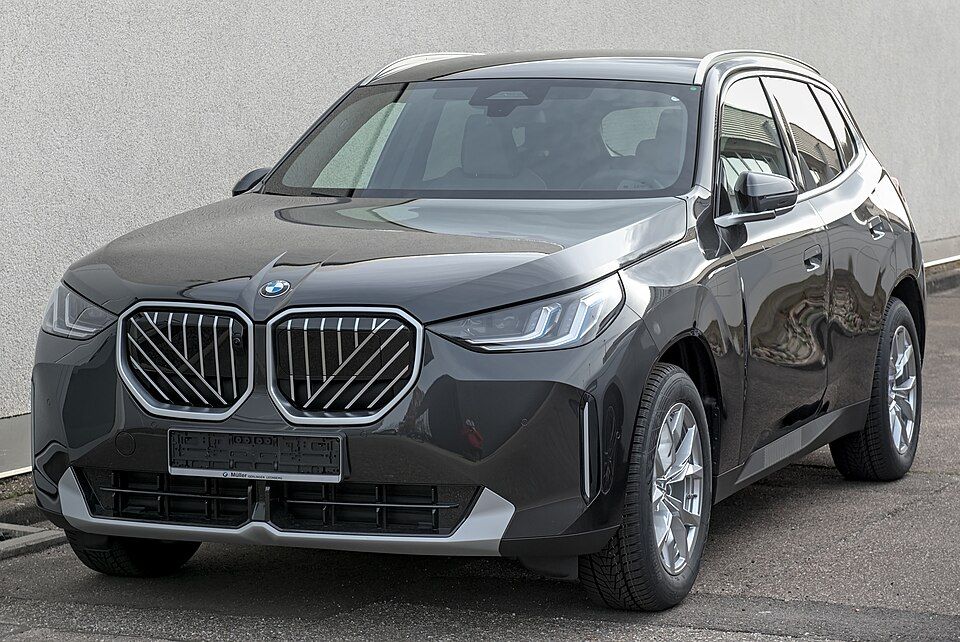
Battery and range
Battery19.7 kWhElectric range91 km (NEDC)Power point8 hoursPetrol use, flat battery*7.6 L/100 kmPrice
From$107,700 + on-roadsElectric range is the maker's claim on the test cycle shown. *Petrol use with a flat battery is our estimate from reviews; the makers only publish a figure that assumes a full battery.
Photo: Alexander Migl, CC BY-SA 4.0, via Wikimedia Commons. May show an overseas version or a related model.
Running costsAbout $23.39 a week plugged in at home (NSW)
What would it cost you to run?
Your detailsYour state · 250 km a weekChange
Your new solar system
Panels power your house as well as the car, so we only add the car's part of the cost.
Your current car
About the solar figure: it's an average. Cloudy days, winter and charging at night all mean more power from the grid, so your real cost will vary through the year.
Fine-tune the numbers
Costs in every state
BMW X3 30e xDrive M Sport, 250 km a week. Plugged in, about 85% of driving is on home electricity at each state's 2026–27 default rate; the rest uses petrol at this week's capital-city average.
| State | Full charge | Per week, plugged in | Per week, never plugged in |
|---|---|---|---|
| NSW | $6.68 | $23.39 | $41.67 |
| Victoria | $5.59 | $20.75 | $42.60 |
| Queensland | $5.52 | $20.42 | $41.74 |
| South Australia | $8.25 | $27.30 | $40.74 |
| WA | $6.56 | $22.94 | $40.66 |
| Tasmania | $4.89 | $19.18 | $44.23 |
| ACT | $7.29 | $25.33 | $44.10 |
| NT | $5.93 | $22.07 | $45.62 |
Specs91 km on electricity, then 7.6 L/100 km
Electric range is the maker's claim on the test cycle shown. *Petrol use with a flat battery is our estimate from reviews; the makers only publish a figure that assumes a full battery.
| Variant | Price | Battery | Electric range | Full charge, power point | Petrol use, flat battery* |
|---|---|---|---|---|---|
| M Sport | $107,700 + on-roads | 19.7 kWh | 91 km (NEDC) | 8 hours | 7.6 L/100 km |
Space and practicality5 seats · 460 L boot
More space details and where to measure
| Boot litres measured to | Not stated by BMW |
| A · Boot opening width | Help us measure |
| B · Boot opening height | Help us measure |
| C · Boot lip height, from the ground | Help us measure |
| D · Boot floor depth, seats up | Help us measure |
| E · Boot floor depth, seats folded | Help us measure |
| Flat floor with seats folded | Help us measure |
| Child seat points (ISOFIX + top tether) | Ask the dealer |
| Roof load limit | Ask the dealer |
Where to measure (A to E)
- A Opening width: across the narrowest point of the opening, usually between the tail-light edges, not the widest gap.
- B Opening height: from the lip straight up to the lowest point of the open tailgate (or its latch).
- C Lip height: from the ground to the top of the boot lip, with the car unloaded. Lower means less lifting.
- D Depth, seats up: along the floor from the inside of the lip to the back of the rear seats.
- E Depth, seats folded: from the inside of the lip to the back of the front seats, with them in a normal driving position. Note whether the floor is flat or has a step.
Drawn to the proportions of a typical small SUV. Use a metal tape measure and measure in millimetres. If the boot floor adjusts, measure with it at its lowest setting and say so.
Own one? Grab a tape measure
Makers rarely publish these. Owner measurements are checked before they go up, and credited by first name.
Thanks, got it ✓
We'll check your measurements and add them to this page, usually within a few days.
Litres alone can mislead: some makers measure the boot to the roof, most to the cargo cover. Compare openings and floor depth if you need to fit something bulky, like a pram or a wheelchair.
Sources: CarExpert: 2025 BMW X3 review; carsales: BMW X3 2026 research. Towing from our EV towing guide. Space figures November 2026. Boot measurements marked "owners" were taken by owners and checked by EV Pick.
Owning one5-year cost from $122,363 · track record: Too new to tell · 5 yrs / unlimited km warranty
250 km a week in NSW, plugged in at home most nights. No wall charger needed. Scheduled service every 12 months or 15,000 km, about $500 a visit (estimate, as pricing for this model is not yet published). Warranty: 5 yrs / unlimited km.
| Variant | On the road* | Power + petrol / yr | Servicing / yr | Tyres / yr | 5-year total |
|---|---|---|---|---|---|
| M Sport | $111,700 | $1,217 | $500 | $416 | $122,363 |
What do "on the road" and "cost to own" mean?
Before on-road costs (+ on-roads): the car's list price only. You pay extra government charges and dealer fees on top when you buy.
On-road costs: stamp duty, first year's registration, compulsory third party (CTP) insurance, number plates and the dealer's delivery fee. They usually add $3,000–6,000 depending on the car and your state. Where a price is "before on-roads" we add about $4,000. See stamp duty and rego by state.
Drive-away: a price that already includes the on-road costs, so it's what you actually pay to drive the car home.
On the road price: the drive-away price, or the list price plus our on-road estimate.
Cost to own: everything you'd spend over the years you keep the car (5 unless you change it): the on the road price, plus a home wall charger for EVs (about $2,000, one-off), plus charging or fuel, scheduled servicing and tyres for every year. Divide it by the number of weeks to see what the car really costs you each week.
Match score (Pick my car): this is about fit, not quality. Each car that fits your answers is compared only with the other cars that fit, on eight things, and a car that does something less well than the others in that group scores lower on it, even if it's good at it. Change your budget or answers and the group changes, so the scores do too. The eight things: how much car the money buys (price, 20%), ANCAP safety rating (15%: a current rating counts in full, an expired one less, and a car ANCAP hasn't rated counts as middling), range (15%), performance (0–100 km/h, or power where no time is published, 10%), fast-charging speed (peak DC kW, 10%), warranty length (10%, with the battery warranty counted for cars that plug in), servicing and tyre costs (15%), and recalls and track record (5%: major recalls in Australia on our list count against a car (our recall list covers the bigger, well-reported ones, so a clean record here is not a guarantee), and models sold here for longer get a little credit). A figure we don't have counts as middling, not as bad. "Most car for my budget" ranks by this match score; "Lowest cost to own" ranks by cost and uses the score only to split near-ties.
Not included: yearly rego renewals and insurance after the first year (see what EVs and hybrids cost to insure), finance interest, and what the car is worth when you sell it. These vary too much by person and car to estimate fairly, and resale value is the biggest unknown, especially for newer brands.
Insurance isn't included above. See what EVs and hybrids cost to insure and get quotes before you buy.
In our rankings: No. 38 of 39 plug-in hybrids
Reliability and track record
How we rate: under 2 years on sale here is "Too new to tell". A widely reported fault or repeated recalls is "Known issues". Otherwise it's "Established". We list documented problems with a source, not opinions. Single recalls that were fixed are listed but don't change the rating, as most models have some.
The BMW X3 30e xDrive has been on sale here for less than two years, so there isn't enough Australian ownership history to judge. That isn't a bad sign, just an unknown. A long warranty matters more for newer models.
About BMW
German premium brand with a big EV range. Sister brands: Mini. Who owns which car brand.
Buying usedUsed ones from about $46,200 · recalls, prices by year, new vs nearly new
Buying a used BMW X3 xDrive30e
The saving compares the cheapest new version with the low end of the typical used range (base versions). Used ranges span all versions sold that year, and *new prices before on-roads include about $4,000 on-road costs. Running costs are about the same if the version is the same.
New or nearly new?
A base 2023 car costs about $62,100 (56%) less than the cheapest new one, with about 2 years of warranty left. That's a strong case for buying nearly new, though the new version has changed.
Prices by year
Typical prices by year (November 2026, carsales). They span the versions sold that year; condition and kilometres move the price a lot.
- 2021–23 (G01): about 41 km on electricity, then 8 L/100 km. Fuel figure is our estimate once the battery is flat. 41 km is the Australian electric-range claim; CarExpert found the real range well short. Boot drops from 550 to 450 litres. AC charging at 3.7 kW only. The 2025-on X3 30e is a new generation with a bigger battery.
2021: $46,200–$52,400 · 2022: $47,500–$58,200 · 2023: $49,600–$64,500
Battery warranty: 6 yrs / 100,000 km (drive battery; check with BMW), counted from when the car was first sold. Check how much is left.
Recalls: none found on the Australian recall register. Still check the VIN before buying.
Check before you buy
- Real electric range is short (CarExpert found it well below 41 km): it suits short daily trips.
- BMW's car warranty was 3 years on these, so most have none left.
- Enter the VIN at vehiclerecalls.gov.au to see every recall for that exact car.
- Take our used hybrid checklist to the inspection.
Full used BMW X3 xDrive30e guide Is it a fair price?
Or let Pick my used car rank the options for your budget.
Road tripsFuel costs on big Australian trips
Fuel cost for the M Sport at its claimed 7.6 L/100 km and this week's NSW petrol price, starting with a full battery. Under each trip: the same drive in its closest electric rival, with charging stops. Tap a trip for the full charging guide.
Volvo EX90: $125 in charging, 3 charging stopsSydney to Brisbane908 km · about $149 in petrol and power · 1 refuel
Volvo EX90: $133 in charging, 3 charging stopsBrisbane to Cairns1693 km · about $280 in petrol and power · 2 refuels
Volvo EX90: $269 in charging, 7 charging stopsMelbourne to Adelaide726 km · about $119 in petrol and power · 1 refuel
Volvo EX90: $96 in charging, 2 charging stopsSydney to Canberra286 km · about $45 in petrol and power · no refuel
Volvo EX90: $25 in charging, no charging stopsMelbourne to Adelaide via the Great Ocean Road970 km · about $159 in petrol and power · 1 refuel
Volvo EX90: $139 in charging, 4 charging stopsPerth to Adelaide across the Nullarbor2701 km · about $448 in petrol and power · 4 refuels
Volvo EX90: $454 in charging, 14 charging stopsAdelaide to Darwin3023 km · about $501 in petrol and power · 4 refuels
Volvo EX90: needs a detourBrisbane to Darwin3421 km · about $568 in petrol and power · 5 refuels
Volvo EX90: needs a detourPerth to Darwin via Broome4248 km · about $706 in petrol and power · 6 refuels
Volvo EX90: needs a detour
RivalsLexus RX 450h+, Volvo XC90 T8 Plug-in Hybrid, Volvo XC60 T8 Plug-in Hybrid
 LexusRX 450h+$105,350 · $22.45/wk
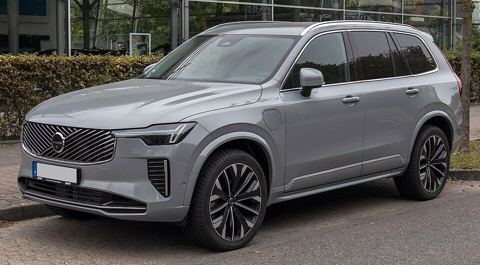 VolvoXC90 T8 Plug-in Hybrid$114,222 · $26.37/wk
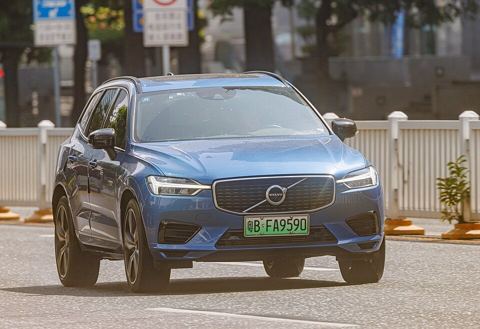 VolvoXC60 T8 Plug-in Hybrid$92,990 · $23.29/wk
See all four side by side in Compare ›
More on rivals: head-to-heads and what's coming
The BMW X3 30e xDrive against EVs
The eight EVs with the lowest 5-year cost to own, against the BMW X3 30e xDrive M Sport at $122,363. Green means the EV works out cheaper. EV totals include a home charger.
| EV | Charging / week | 5-year total | vs this plug-in |
|---|---|---|---|
| BYDAtto 1 Essential | $14.54 | $29,146 | −$93,217 |
| BYDDolphin Essential | $14.91 | $38,141 | −$84,222 |
| LeapmotorB03X Style | $12.75 | $38,462 | −$83,900 |
| GeelyEX2 Complete | $14.91 | $39,523 | −$82,840 |
| GWMOra 5 Lux | $14.54 | $42,376 | −$79,986 |
| MGMG4 Urban 43 | $15.47 | $42,474 | −$79,888 |
| HyundaiInster Standard Range | $13.41 | $44,497 | −$77,865 |
| GACAion UT Premium | $15.38 | $45,160 | −$77,203 |
Head-to-head with its closest electric rivals
QuestionsHow much is a BMW X3 30e xDrive in Australia? and 4 more
How much is a BMW X3 30e xDrive in Australia?
The BMW X3 30e xDrive starts from $107,700 + on-roads (November 2026). Prices change often, so check with a dealer.
How far can a BMW X3 30e xDrive go on electricity?
The claimed electric range is up to 91 km. Expect roughly 80% of that in real driving, which still covers most people's daily trips. After that it runs as a petrol hybrid.
Do I need a home charger for a BMW X3 30e xDrive?
No. Its 19.7 kWh battery refills from a normal power point in about 8 hours, so overnight is plenty. That saves the $2,000 or so a wall charger costs.
What if I don't plug the BMW X3 30e xDrive in?
Then it's a petrol car using about 7.6 L/100 km (our estimate), or about $41.67 a week for 250 km in NSW. A plug-in hybrid only saves money if you charge it.
Is a BMW X3 30e xDrive cheaper to own than an EV?
Counting price, running costs, servicing and tyres over 5 years, 2 of the 10 similar EVs we track (SUVs from about $97,000 to $143,000) cost less to own: the Kia EV9 ($112,193) and BMW iX4 ($117,934).
How we work it out, and our sources
Weekly cost = the car's energy use × 250 km × your electricity or fuel price, with 90% of charging at home. Prices are list prices at November 2026; check with the dealer.
- Electricity: 2026–27 default rates (AER, Victorian Default Offer, state retailers). Public charging: Sydney network prices, July 2026.
- Petrol and diesel: capital-city daily averages from state government price feeds, via FuelRadar, 12 November 2026. Diesel for Hobart, Canberra and Darwin is estimated from the national fall.
- Cars: maker figures via CarExpert, Drive, CarsGuide and EV Central. Plug-in electric range is taken as 80% of the claim.
- Servicing: published capped prices; marked as an estimate where not yet published (CarExpert comparison).
- Tyres: an EV set lasts about 35,000 km, a petrol or hybrid set 50,000 km (RACV); prices from Gridly.
- Home charger: about $2,000 installed ($1,000–$3,000). Novated leases: PwC summary.
Printed from EV Pick Australia · evpick.com.au. Prices and costs are estimates; check with the dealer. © 2026 EV Pick (T. Crouch). For personal use only; not to be copied, republished or sold without permission.
Was this page useful?
Glad this helped ☕
If EV Pick saved you time or money, a coffee helps keep it independent. Every dollar goes back into improving the site.