
Used Nissan Sakura (Japanese import)
The Nissan Sakura was never sold new in Australia: every one here is a Japanese import. Import-to-order prices on grabacar.au for low-kilometre 2023–24 cars were about $24,350–$27,450 drive-away. Before you buy, check its compliance, the Japanese auction sheet and its recall history.
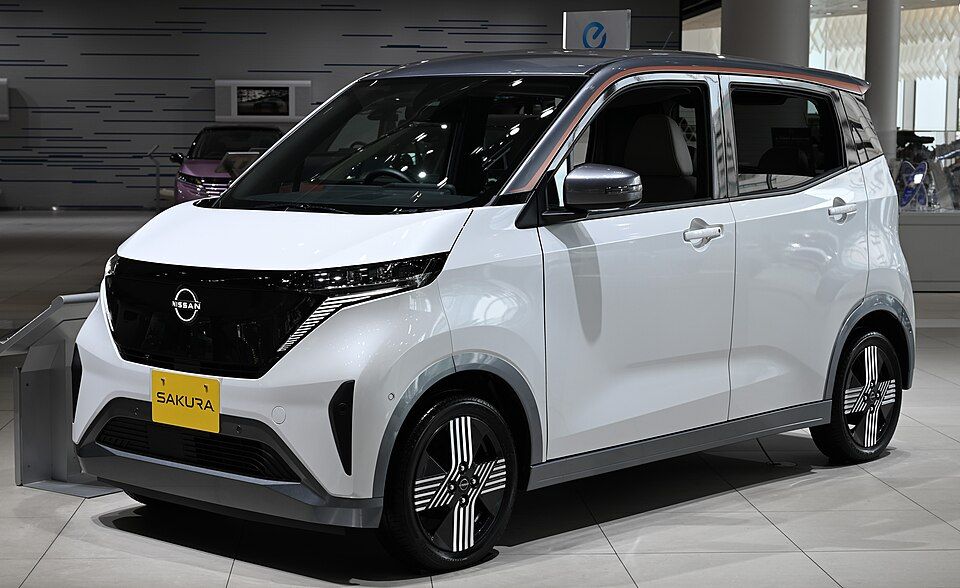
About the Nissan Sakura
Japan's best-selling small electric car: a kei car (Japan's tiny-car class) with a 20 kWh battery. It was never sold new in Australia, but import specialists bring them in under the specialist vehicle scheme. Its twin is the Mitsubishi eK X EV.
- 2022 on: Fully electric: 20 kWh battery, 47 kW motor, 180 km range on Japan's WLTC test. Kei-car size: 3.40 m long and 1.48 m wide, with four seats.
Japanese official fuel figures are measured on a gentler test than ours, so expect to use more in real driving.
Asking prices
What Australian sellers were asking for these cars in November 2026, by generation. Kilometres, condition and the version move the price a lot, so compare at least three similar cars.
Import-to-order prices on grabacar.au for low-kilometre 2023–24 cars were about $24,350–$27,450 drive-away (November 2026). Import specialist J-Spec estimated about $22,300 landed and complied for a 2022 car with 17,000 km.
- 2022 onToo few to say2022: $22,300
The 1 listings we saw
- 2022 X (landed and complied, estimate) · 17,000 km · $22,300 (J-Spec Imports)
Asking prices are from Australian listings on carsguide.com.au and import specialist Best People Movers, checked November 2026. Glass's and RedBook don't value most imports, so these are what sellers ask, not valuations. Facts from each model's Wikipedia page. Check with the seller.
Import checks before you buy
- Compliance and the RAV: An imported car must be on the government's Register of Approved Vehicles (RAV) and carry an Australian compliance plate. Ask the seller to show you both.
- Auction sheet and kilometres: Ask for the original Japanese auction sheet. It grades the car's condition and records the kilometres in Japan, so you can check the odometer hasn't been wound back.
- Japanese recalls: Most Japanese recalls aren't on the Australian register, so an Australian VIN check can come back clean even when work is outstanding. Ask the importer for proof the Japanese recalls were done; Toyota and Nissan dealers can sometimes check by chassis number.
- Hybrid or EV battery: There's no Australian factory warranty on an import. Get a battery health check from a hybrid or EV specialist, or a Toyota or Nissan dealer, before you pay.
- Radio, maps and menus: Japanese radios tune a different FM band and the screens are often in Japanese. Check a band expander or new head unit has been fitted, and that you can change the settings to English.
- Parts, servicing and insurance: Find a local mechanic who works on imports, check common parts (tyres, brake pads, filters) are easy to get, and get an insurance quote first: some insurers charge more or won't cover imports.
- Dealer or private sale: A licensed dealer must usually give a statutory warranty depending on the car's age and kilometres (the rules differ by state). Private and auction sales don't come with one.
- PPSR check: Run a PPSR check (ppsr.gov.au) for finance owing and a written-off history, like any used car.
Take our used hybrid checklist too.
Checks for a used Nissan Sakura
- It uses Japanese charging plugs: Type 1 for everyday charging and CHAdeMO for fast charging. Most Australian fast chargers are CCS2, and CHAdeMO chargers are getting rare, so plan on charging at home.
- Expect about 180 km on Japan's gentle test, less on the highway. It suits a city car or second car.
- Check the battery health report and that a home charging cable for Australian power points comes with it.
More on buying used
- All Japanese import guides
- Best used EVs and hybrids sold new in Australia
- Pick my used car: our top three picks for your budget
Sources: Nissan Sakura (Wikipedia), J-Spec Imports: 2022 Nissan Sakura X, grabacar.au Sakura listings.
The EV Pick Monthly
The month's new cars, prices, battery breakthroughs and power deals for Australians, in one short email. Five-minute read, once a month.
One email a month. Unsubscribe any time. Privacy · Past issues
Common questions
Was the Nissan Sakura sold new in Australia?
No. Every Nissan Sakura in Australia is a used import from Japan, usually brought in by a specialist importer under the government's specialist vehicle scheme.
How much is a used Nissan Sakura?
We haven't seen enough Australian listings to give a fair range. Compare at least three similar cars before you buy.
Does the Nissan Sakura have recalls?
Japanese recalls mostly aren't on the Australian register. Ask the importer for proof the Japanese recalls were done before you buy.
Is a used Nissan Sakura a good buy?
It can be, if the compliance paperwork is in order, the kilometres match the Japanese auction sheet and the hybrid system checks out. Find a mechanic who services imports first.
More guides
You might also like
How we work it out, and our sources
Weekly cost = the car's energy use × 250 km × your electricity or fuel price, with 90% of charging at home. Prices are list prices at October 2026; check with the dealer.
- Electricity: 2026–27 default rates (AER, Victorian Default Offer, state retailers). Public charging: Sydney network prices, July 2026.
- Petrol and diesel: ACCC capital-city averages, 21 October 2026.
- Cars: maker figures via CarExpert, Drive, CarsGuide and EV Central. Plug-in electric range is taken as 80% of the claim.
- Servicing: published capped prices; marked as an estimate where not yet published (CarExpert comparison).
- Tyres: an EV set lasts about 35,000 km, a petrol or hybrid set 50,000 km (RACV); prices from Gridly.
- Home charger: about $2,000 installed ($1,000–$3,000). Novated leases: PwC summary.
Printed from EV Pick · evpick.com.au. Prices and costs are estimates; check with the dealer. © 2026 EV Pick (T. Crouch). For personal use only; not to be copied, republished or sold without permission.