
Legends: the first Nissan Leaf
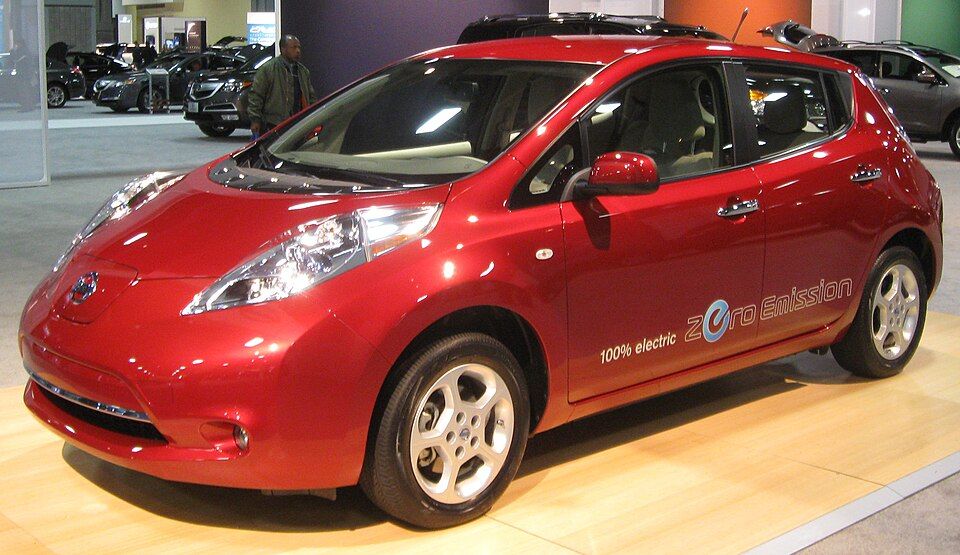
The Nissan Leaf was the first mass-market electric car, and it reached Australia in mid-2012 for $51,500 plus on-roads, with about 160–170 km of range. It sold slowly, but more than a decade later early Leafs are some of the cheapest EVs you can buy: perfect city runabouts if you check the battery.
A brave, expensive start
Nissan opened Australian orders in February 2012 and delivered the first cars that June. The price was $51,500 before on-road costs for a small hatch, when a petrol Pulsar cost a fraction of that. Range was quoted at about 160–170 km.
Sales were slow, and in May 2013 Nissan cut the price to $39,990 drive-away, a drop of around $15,000.
How it works
A 24 kWh battery under the floor feeds an 80 kW electric motor at the front. It charges overnight from a home power point, and early cars could use the CHAdeMO fast-charging plug. A 30 kWh battery arrived in 2016 before the second-generation Leaf replaced it.
The catch is cooling. The battery is cooled only by air, with no liquid cooling, so heat speeds up ageing. In hot parts of Australia many early Leafs have lost a noticeable share of their range.
Why it never dies
There's very little to wear out: no oil changes, no exhaust, no gearbox, and brakes that last because the motor does much of the slowing. Many early Leafs are still running daily, just with less range than they had new.
Owners have even upgraded old cars with bigger second-hand battery packs, a good sign of how simple and fixable the car is.
Buying one today
Early Leafs are now among the cheapest used EVs in Australia. A 2016 Leaf was selling for roughly $10,000–$15,000 in late 2025 depending on condition and battery health, and older cars can be cheaper.
- Check the battery health. The dash shows capacity bars, and an OBD adapter with a phone app can read the exact state of health.
- Test the real range on a full charge. Many early cars now do around 100 km or less.
- Think city car. It's ideal as a second car for school runs and commuting.
- Check the fast-charging plug. CHAdeMO chargers are becoming rarer as newer cars use CCS.
Take our used EV checklist with you.
What came next
The second-generation Leaf (from 2019 in Australia) brought a 40 kWh battery, and an all-new Leaf is on the way. See the new Nissan Leaf and the cheapest EVs to own today.
Watch
Sources
The EV Pick Monthly
The month's new cars, prices, battery breakthroughs and power deals for Australians, in one short email. Five-minute read, once a month.
One email a month. Unsubscribe any time. Privacy · Past issues
Common questions
How much did the first Nissan Leaf cost in Australia?
$51,500 before on-road costs at launch in 2012. Nissan cut it to $39,990 drive-away in May 2013.
Why do old Nissan Leaf batteries lose range?
The battery is air-cooled rather than liquid-cooled, so heat speeds up ageing. Cars from hot climates often have less range left.
Is an old Nissan Leaf worth buying?
It can be a cheap city car if you check battery health and its real range covers your daily driving. Expect around 100 km or less from many early cars.
More guides
You might also like
How we work it out, and our sources
Weekly cost = the car's energy use × 250 km × your electricity or fuel price, with 90% of charging at home. Prices are list prices at October 2026; check with the dealer.
- Electricity: 2026–27 default rates (AER, Victorian Default Offer, state retailers). Public charging: Sydney network prices, July 2026.
- Petrol and diesel: ACCC capital-city averages, 21 October 2026.
- Cars: maker figures via CarExpert, Drive, CarsGuide and EV Central. Plug-in electric range is taken as 80% of the claim.
- Servicing: published capped prices; marked as an estimate where not yet published (CarExpert comparison).
- Tyres: an EV set lasts about 35,000 km, a petrol or hybrid set 50,000 km (RACV); prices from Gridly.
- Home charger: about $2,000 installed ($1,000–$3,000). Novated leases: PwC summary.
Printed from EV Pick · evpick.com.au. Prices and costs are estimates; check with the dealer. © 2026 EV Pick (T. Crouch). For personal use only; not to be copied, republished or sold without permission.